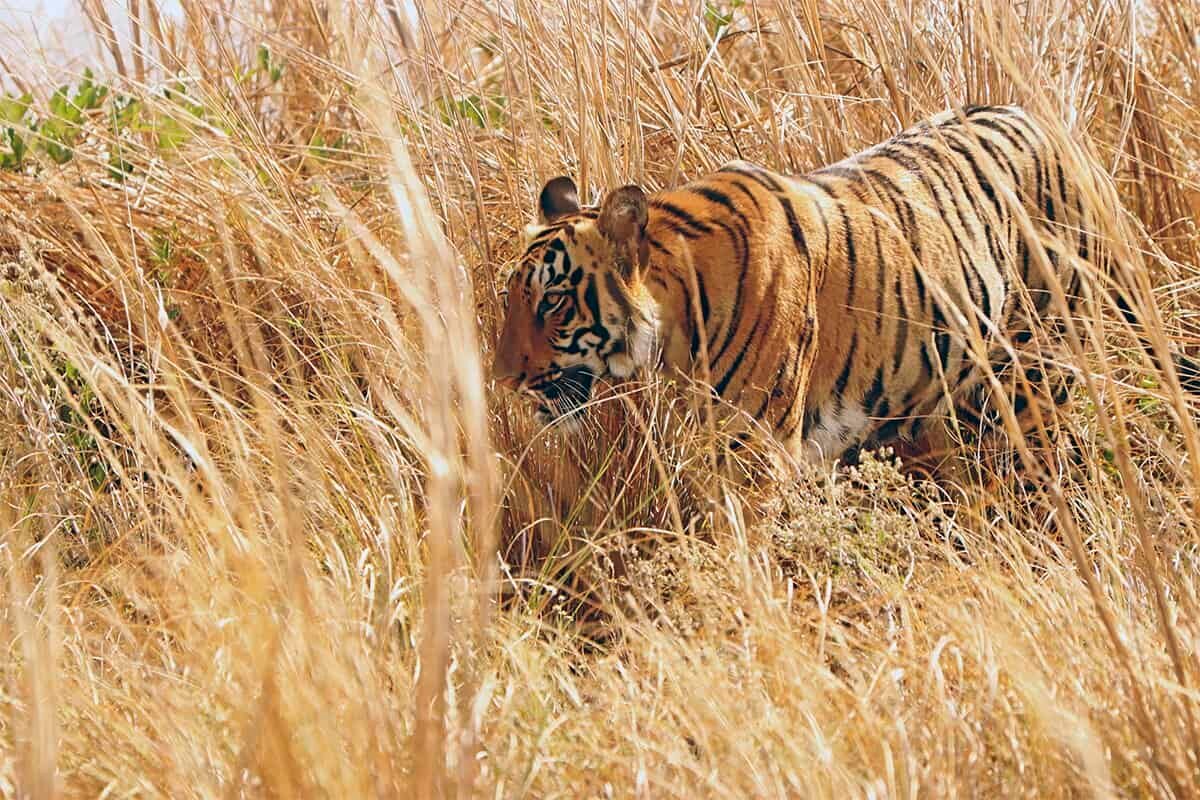
Tadoba Andhari Tiger Reserve in Chandrapur district, Maharashtra, protects teak and bamboo forest, grassland, rocky hills and lakes. That mix of habitats supports far more than tigers, and visitors who watch the whole landscape tend to come away happier than those who only look for one animal.
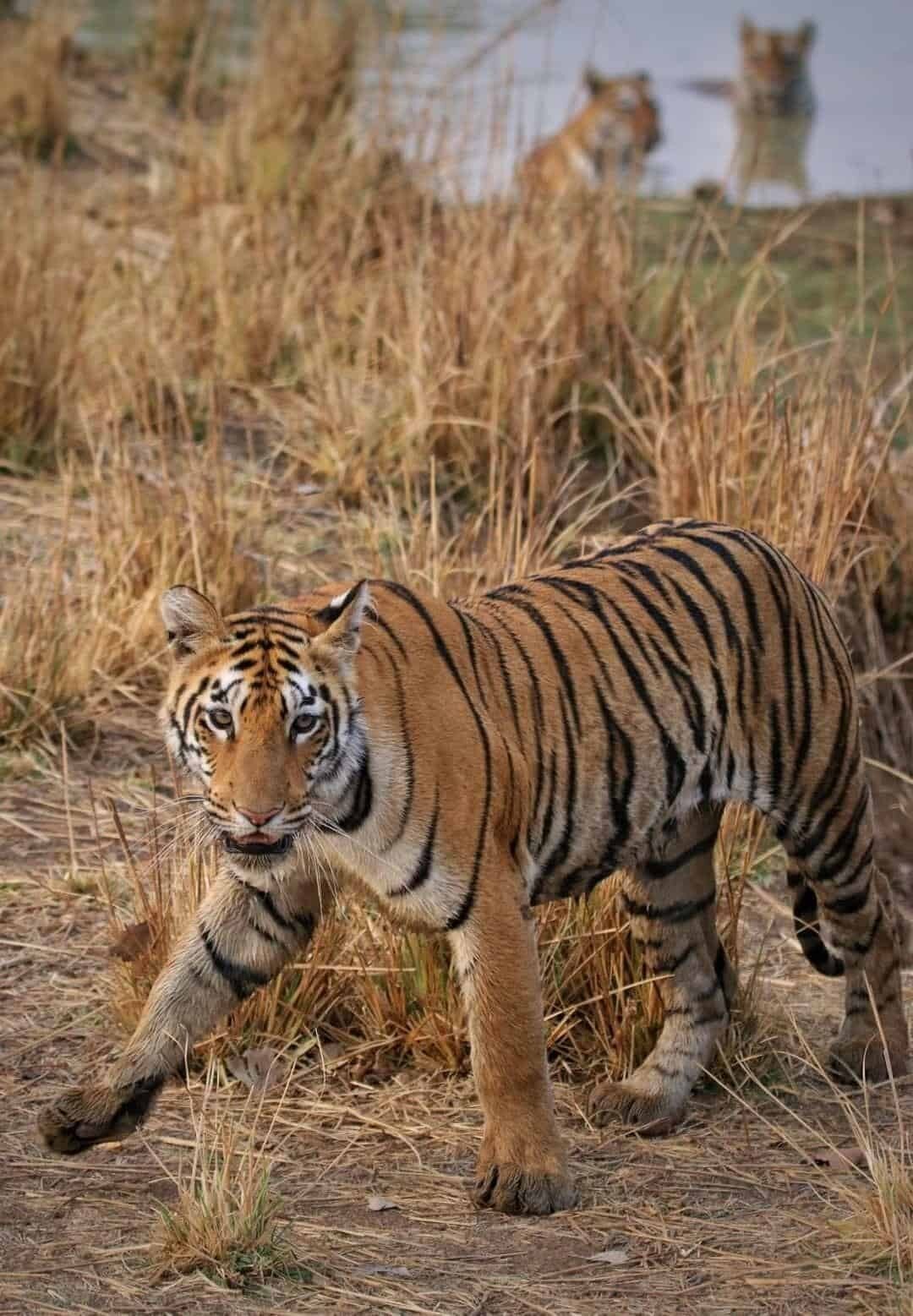
Tigers
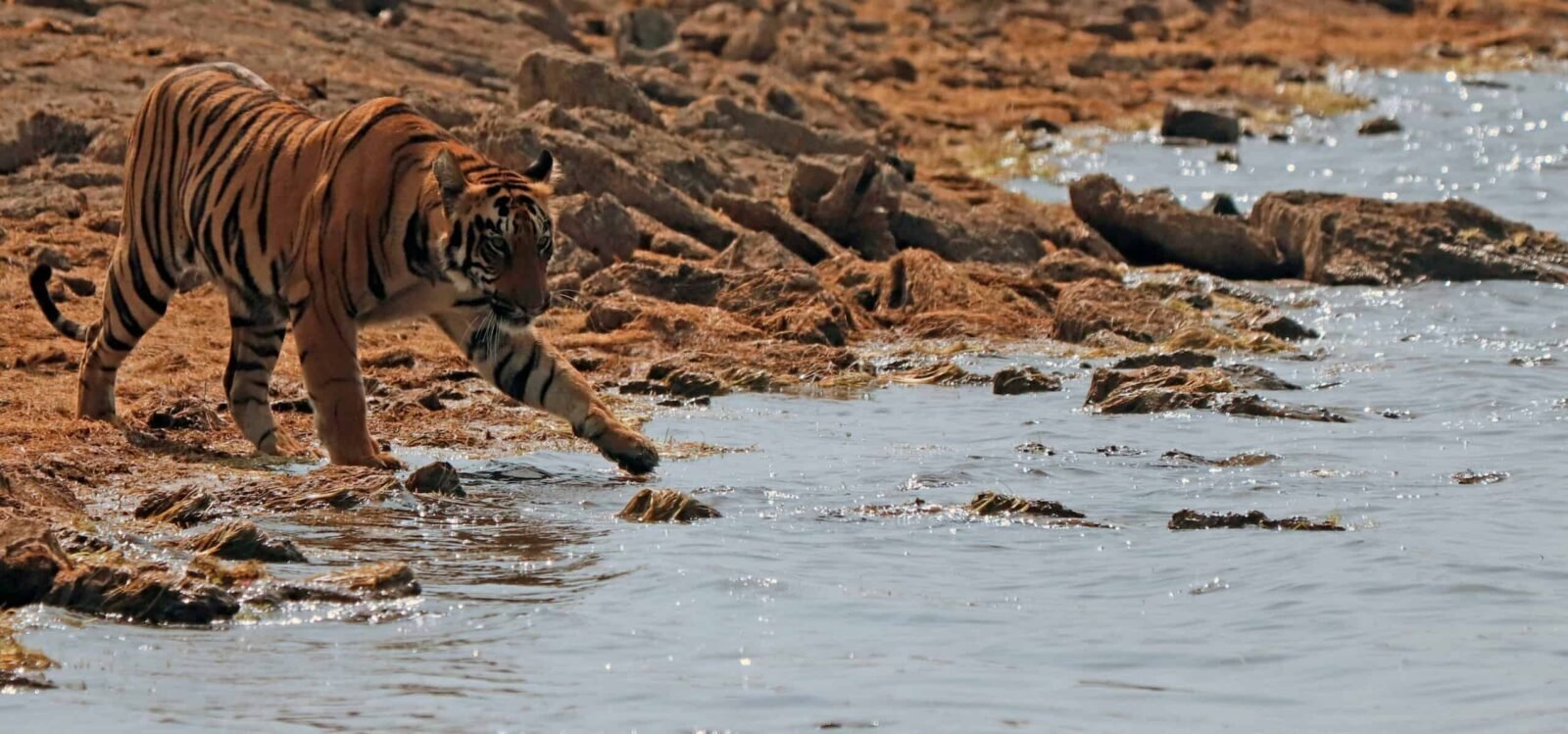
The tiger is the reason most people come. Tigers are solitary, mostly active around dawn and dusk, and use cover well, so even in a reserve known for sightings an hour of quiet watching can pass without a glimpse. Waterholes, forest tracks and the edges of grassland are the places guides check first. Alarm calls from deer and langur often tell an experienced guide more than any footprint.
Leopards and other predators
Leopards live in the reserve but are far harder to see than tigers. Dholes (Indian wild dogs) hunt in packs, and sloth bears are most often noticed along rocky ground and flowering trees. These are brief, unplanned encounters and are best treated as a bonus.
Birds
More than 200 bird species are recorded around the lakes, forest and grassland. Early morning is usually best, and winter brings additional visitors. Binoculars make a real difference.
Herbivores
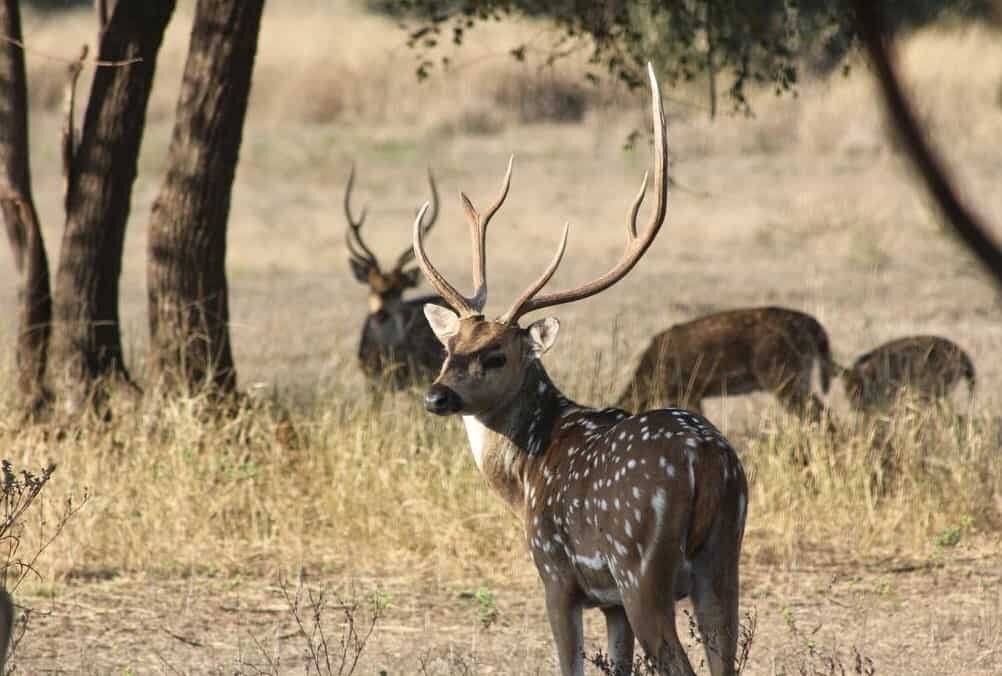
Sambar, spotted deer, nilgai and gaur are the animals you are most likely to see. They are also the reason the forest is rewarding to watch: how they behave, and when they suddenly stop grazing, often shows that a predator is near.
Watching wildlife well
- Plan several safaris rather than one. Chances improve with patience, not with any single gate or season.
- Mix core and buffer areas where possible. Read Core vs buffer and Safari gates and zones.
- Follow your guide and forest staff, stay in the vehicle, keep quiet and keep your distance.
- Choose the season to match your priorities. See Best time to visit.
Sightings can never be guaranteed. No operator, gate, season or guide can promise a tiger.
Ready to plan? Tell us your dates and group size and we will come back with options. An enquiry does not reserve a permit.